Bilateral Coordination in Children
What Is Bilateral Coordination?
Bilateral coordination is the ability to use both sides of the body together in a smooth and coordinated way. For example, catching a ball, riding a bike or cutting with scissors all require this important skill.
It’s a key part of a child’s development and supports everything from self-care and school work to play and sport. Children begin to develop bilateral coordination in infancy and it becomes more refined as they grow.
 Why Is It Important?
Bilateral coordination helps your child:
- Strengthen their motor skills
- Develop body awareness and balance
- Perform everyday tasks more independently
- Improve school readiness and learning skills
10 Benefits of Bilateral Coordination Activities
- Supports fine motor skills - e.g. using cutlery or tying shoelaces
- Builds gross motor skills - such as climbing or hopping
- Encourages brain development - helps both sides of the brain work together
- Improves handwriting - stabilising paper with one hand while writing with the other
- Promotes mid-line crossing - important for reading and writing
- Aids self-care - getting dressed, brushing hair, doing up buttons
- Develops strength and posture - through crawling, skipping, or yoga
- Fosters independence - managing daily routines with more confidence
- Supports social play - playing catch, dancing or team games
- Improves planning and sequencing - completing step-by-step tasks
Other activities to build coordination for learning include
- Throwing and catching games
- Cutting and sticking activities
- Crawling obstacle courses
- Building with blocks
- Playing musical instruments
- Wheelbarrow walking or crab walks
All of these help build strong foundations for coordination and learning.
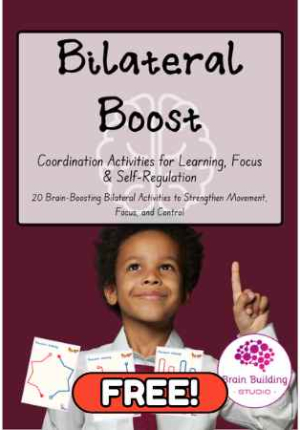
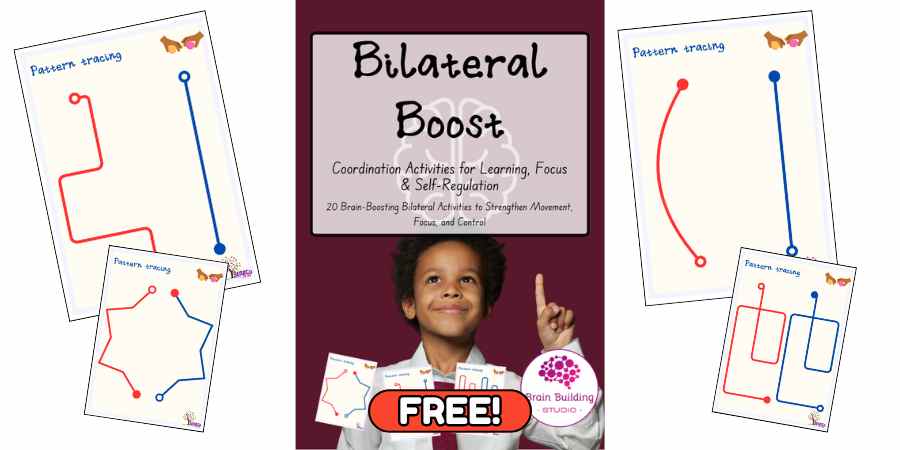
Trace the lines forward and backwards, with your fingers, balls or bottle cap!