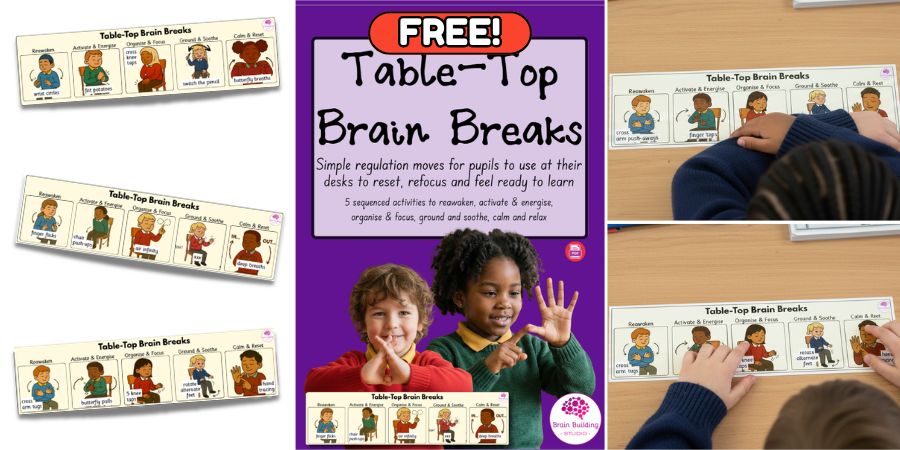
Table-Top Brain Breaks
What are table-top brain breaks?
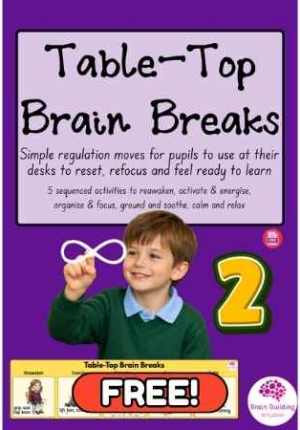
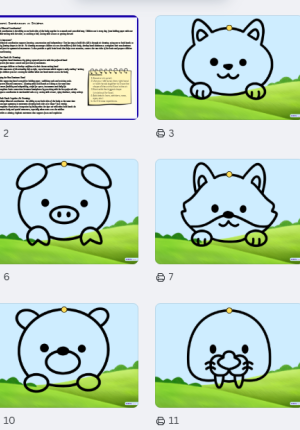
A table‑top brain break is a short, structured regulation activity that pupils can complete while seated at their desk. These movements are deliberately small, quiet, and predictable, making them ideal for classrooms where pupils need a moment to reset without leaving their space. They help the brain shift from overwhelm or distraction into a calmer, more organised state.
Why are brain breaks important?
Table‑top brain breaks support pupils to regulate their nervous system, especially during moments of cognitive overload, emotional dysregulation, or sensory fatigue. They offer a quick, accessible way for children to feel grounded and ready to re‑engage with learning. For many pupils with SEND, trauma histories, or anxiety, these micro‑breaks can be the difference between escalation and recovery.
Ten benefits of brain breaks
- Reduces stress and anxiety by calming the nervous system
- Improves focus and attention, helping pupils return to learning
- Supports emotional regulation through predictable, soothing movements
- Builds interoceptive awareness as pupils notice their breathing and body signals
- Provides sensory input without overwhelming the environment
- Increases working memory capacity by giving the brain a brief reset
- Enhances executive functioning such as planning and self‑monitoring
- Promotes independence as pupils learn strategies they can use anytime
- Reduces classroom disruptions by offering proactive regulation
- Creates a calmer learning culture where wellbeing is embedded, not added on
Other ideas for brain breaks
If you want to expand your toolkit, these pair beautifully with your existing visuals:
- Hand massage (slow pressure across the palm and fingers)
- Seated twist (gentle rotation to release tension)
- Rainbow breathing (drawing an arc in the air while inhaling/exhaling)
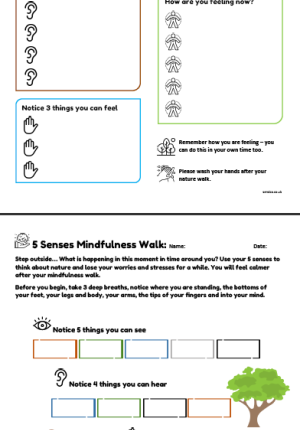
- Five‑sense check‑in (naming what you can see/hear/feel etc.)
- Desk drumming patterns (quiet rhythmic tapping for regulation)
- Foot pushes (pressing feet into the floor to feel grounded)
- Mini‑visualisation (10 seconds imagining a calm place or colour)
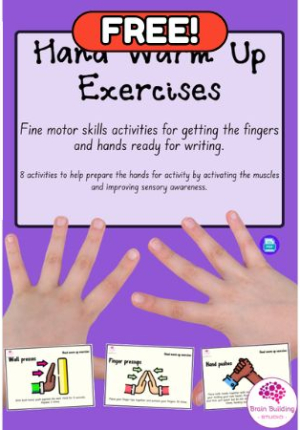
- Finger–thumb taps: tap each finger to the thumb slowly, then reverse the pattern.
- Desk push‑aways: place hands on the desk and gently push as if moving it away.
- Seated shoulder rolls: slow circles forward and backward to release tension.
- Ear‑to‑shoulder stretches: gentle neck stretches while keeping the body still.
- Palm press: press both palms together in front of the chest for grounding input.
- Slow finger curls: curl fingers into a fist one at a time, then uncurl slowly.
- Breathing with a pencil: trace up the pencil while inhaling, down while exhaling.
- Mini‑scribble release: 5 seconds of fast scribbling to discharge energy, then pause.
- Colour‑spot scanning: silently find 5 things of a chosen colour around the room.
- Desk‑edge grip: hold the edge of the desk gently and release with slow breaths.