Calm & Connect: Moro Reflex Integration Cards
Building emotional regulation, attention and resilience through gentle neurodevelopmental movement
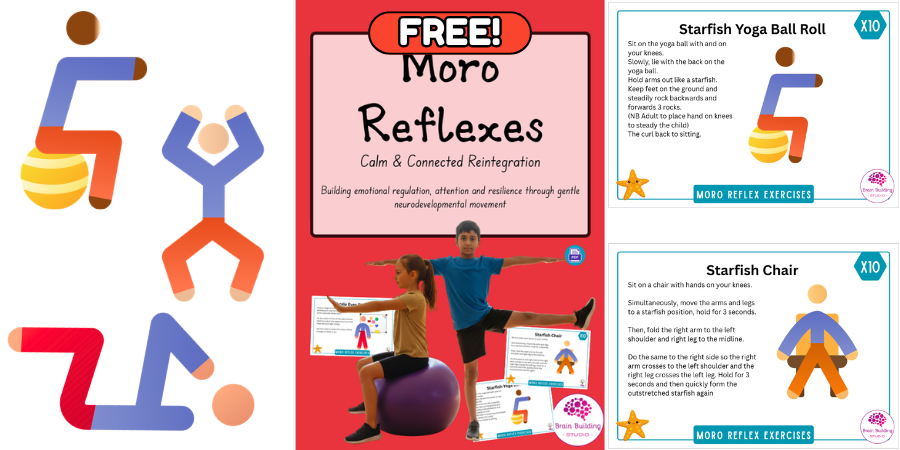
A structured set of movement-based activity cards designed to support the integration of the Moro (startle) reflex. These cards help children develop calm responses to sensory input, improve emotional regulation, and strengthen the foundations for learning, behaviour and wellbeing.
What is the Moro Reflex?
The Moro reflex is a primitive survival reflex present at birth. It is triggered by sudden changes such as loud noises, unexpected movement, or loss of balance. The typical response is a startle reaction: arms extend, hands open, the body stiffens, and the child may gasp or cry.
This reflex is expected to integrate (fade) by around 4–6 months of age as higher brain centres mature and the nervous system develops more efficient self-regulation.
Why Does the Moro Reflex Remain Unintegrated?
The Moro reflex may remain active when the nervous system has not had the opportunity to fully mature or organise itself. Contributing factors can include:
- Birth experiences (e.g. emergency birth, caesarean, prematurity, birth trauma)
- Limited opportunities for early movement (e.g. reduced tummy time)
- High or prolonged stress in infancy or early childhood
- Sensory processing differences
- Neurodevelopmental differences (e.g. ASD, ADHD, dyspraxia)
- Early illness or medical intervention affecting vestibular input
- Ongoing environmental stress or emotional insecurity
When the reflex remains active, the child’s nervous system can stay in a constant state of alert, responding as if the world is unpredictable or unsafe.
What We May See in a Child with a Retained Moro Reflex
Children with a retained Moro reflex may show some or many of the following:
Emotional & Behavioural
- Heightened anxiety or emotional sensitivity
- Overreactions to small changes or surprises
- Difficulty calming after upset
- Mood swings or emotional immaturity
- Fight, flight or freeze responses
Attention & Learning
- Poor concentration or distractibility
- Fatigue during learning tasks
- Difficulty coping with transitions
- Overwhelm in busy or noisy environments
Sensory & Physical
- Sensitivity to sound, light, touch or movement
- Poor balance or coordination
- Motion sensitivity (e.g. fear of heights or movement)
- Tendency to startle easily
Social & Self-Regulation
- Difficulty with group situations
- Avoidance of new experiences
- Reliance on adult reassurance
- Low confidence or self-esteem
The Impact of Exercises to Integrate the Moro Reflex
Targeted, gentle movement activities support the nervous system to mature and reorganise. When the Moro reflex begins to integrate, children often experience:
- Improved emotional regulation and resilience
- Increased sense of calm and safety in the body
- Better focus, attention and learning stamina
- Reduced sensory overload and anxiety
- Improved balance and coordination
- Greater adaptability to change and transitions
- Increased confidence and independence
Integration exercises work by:
- Repeating controlled patterns of movement that mimic early developmental stages
- Strengthening connections between the brainstem, vestibular system and higher brain centres
- Supporting the child to shift from a reflex-driven response to a thoughtful, regulated response
- Over time, this allows the child to respond rather than react, creating stronger foundations for learning, relationships and wellbeing.
How These Cards Support Children
These cards provide:
- Clear, accessible instructions for adults and children
- Low-pressure, play-based movement activities
- Opportunities for co-regulation and connection
- A consistent, predictable routine that supports nervous system safety
They are suitable for:
- Classrooms
- Specialist provisions
- Home use
- Therapeutic or intervention settings